Skip to content
Detect Video AI
Restore access
Analyze a video

AI Insights

AI generated videos are getting more realistic every month. Deepfakes, synthetic voices, and edited clips now spread faster than fact checking, especially on social platforms, messaging apps, and short video feeds. That is why verification matters.
In AI Insights, we publish practical and easy to follow guides that help you answer one question with confidence: Is this video real, edited, or AI generated?
Here you will find step by step checklists, visual signs to look for, and clear explanations of the most common manipulation techniques. We cover topics like facial artifacts, unnatural motion, audio deepfakes, lip sync issues, compression tricks, recycled footage, misleading captions, and the patterns used in scam ads and fake influencer campaigns.
This category is the main knowledge hub of DetectVideo.ai. If you work with online content, news, social media, marketing, or you simply want to protect yourself from misinformation, these articles will help you verify clips before you trust, share, report, or react. Our goal is to make video authenticity checks simple, repeatable, and fast, even when the clip looks convincing at first glance.
51 published guides

Guides filed under AI Insights

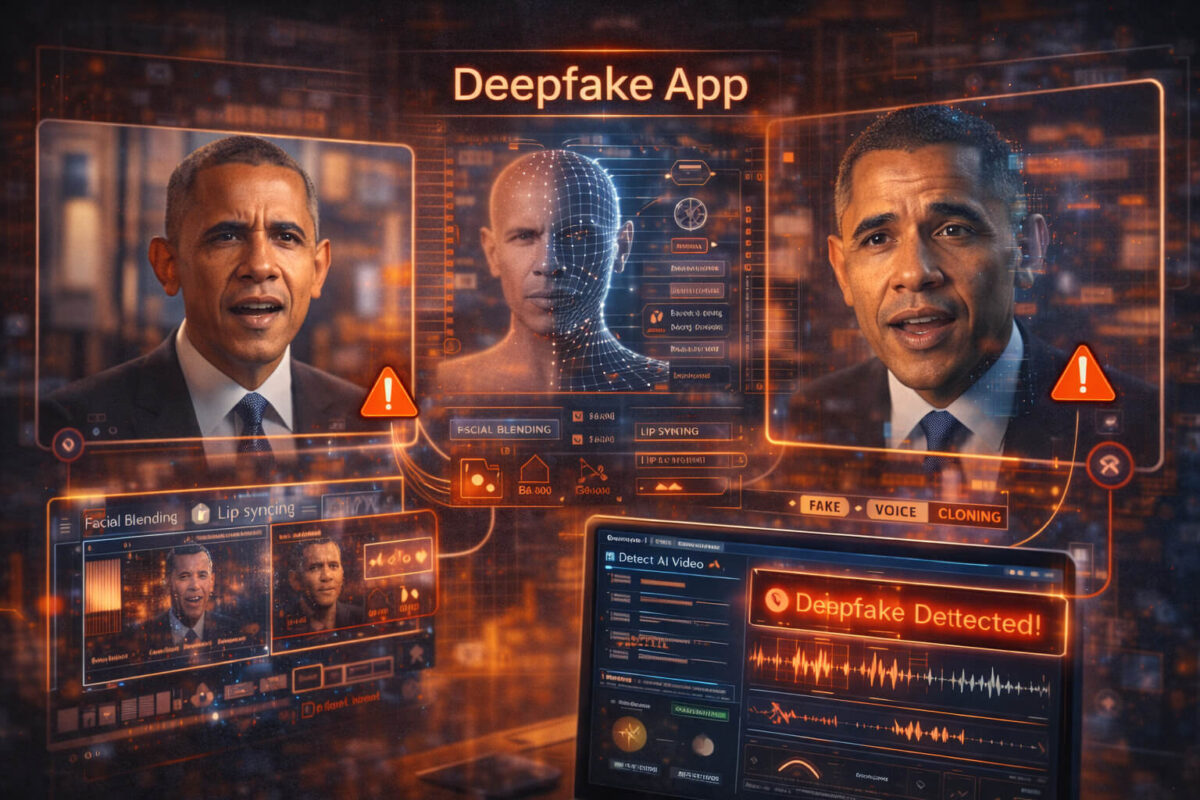
Deepfake App: What It Is, How It Works and How to Detect Fakes

A deepfake app is software that uses AI to create or alter media so that a person can appear to have a different face, voice, expression, or performance. Some apps are built for entertainment and creative effects. Others can produce realistic impersonation content that is difficult to judge from a quick look at a phone […]

Voice Clone Scam: How to Spot and Stop AI Voice Fraud

A voice clone scam succeeds when a familiar voice makes you act before you verify. The caller may sound like your child, manager, bank representative, government official, or someone you recognize from online videos. The audio may be AI-generated, but the fraud usually depends on something much older: urgency, authority, fear, secrecy, and a request […]

AI Lip Sync: Easy Ways to Catch Mismatched Speech

AI lip sync used to look like a cheap movie dub. Today it can look surprisingly convincing, especially in short clips on social media where you do not have time to study every frame. That is why AI lip sync is now a common ingredient in misinformation, scam ads, fake celebrity endorsements, and manipulated “apology” […]

Face Swap Video: How It Works and How to Verify It

A face swap video changes who appears to be performing an action without necessarily changing the performance itself. The body may be real. The camera may be real. The room, timing, gestures, and even the original voice may all be real. What changes is the identity viewers attach to that performance. That is what makes […]

Synthetic Media: Meaning, Types, Risks and Verification

Synthetic media is digital content whose image, sound, video, text, or other meaningful elements are generated or materially altered by automated systems, especially generative AI. It includes fully generated scenes, cloned voices, AI avatars, face swaps, synthetic narration, AI-edited footage, and multimodal content that mixes captured and generated material. But “synthetic” does not mean “false,” […]

Video Provenance: Trace Origin, Edits and Context

Video provenance is the history of a video, not a verdict about whether it looks real. It asks where the footage came from, what happened to it between capture and the copy in front of you, and whether the story attached to that copy still matches the original context. This matters because a perfectly authentic […]

C2PA Metadata: Provenance, Examples and How to Verify It

C2PA metadata is provenance information that can be cryptographically bound to digital media so people and software can inspect where an asset came from, how it was created, and what changes were declared along the way. It is used by the C2PA standard behind Content Credentials, and it applies to more than AI-generated media. A […]

Content Credentials: How to Check and Verify Media

Content Credentials are a way to inspect the recorded provenance of digital media. When a compatible photo, video, audio file, or document carries them, you may be able to see who or what signed the media, which tools were involved, what creation or editing actions were recorded, and whether the credential still validates against the […]

AI Video Watermark: How to Check and Verify AI Clips

An AI video watermark is a provenance signal, not a truth badge. It may tell you that a compatible AI system generated or edited a video, but it does not automatically prove that the clip is unedited, correctly captioned, legally owned, or presented in the right context. The biggest source of confusion is that people […]