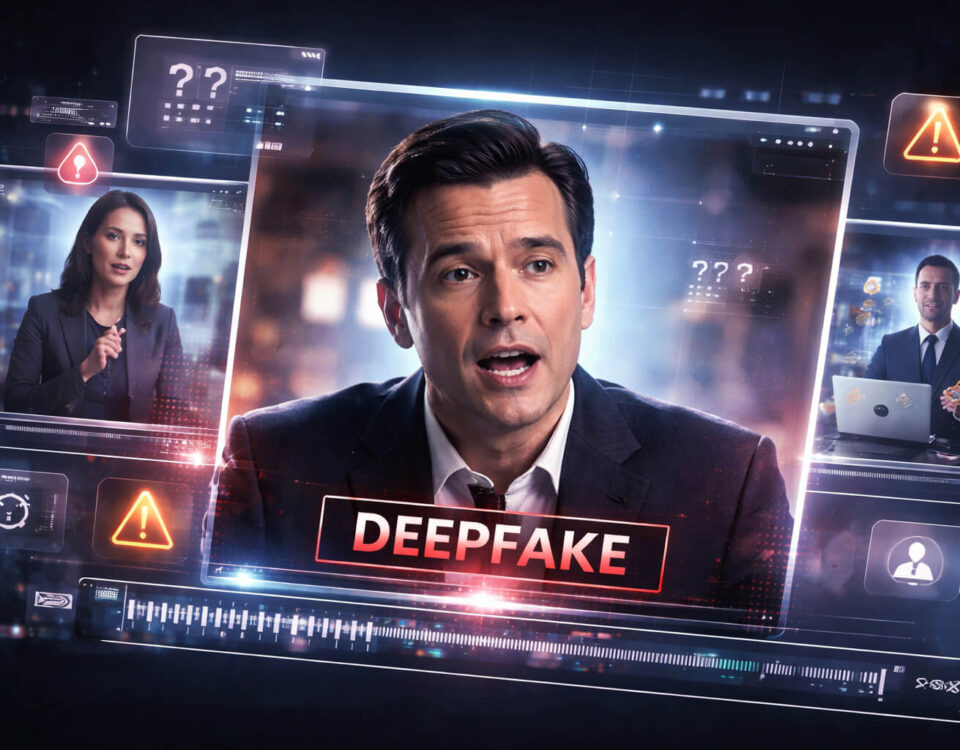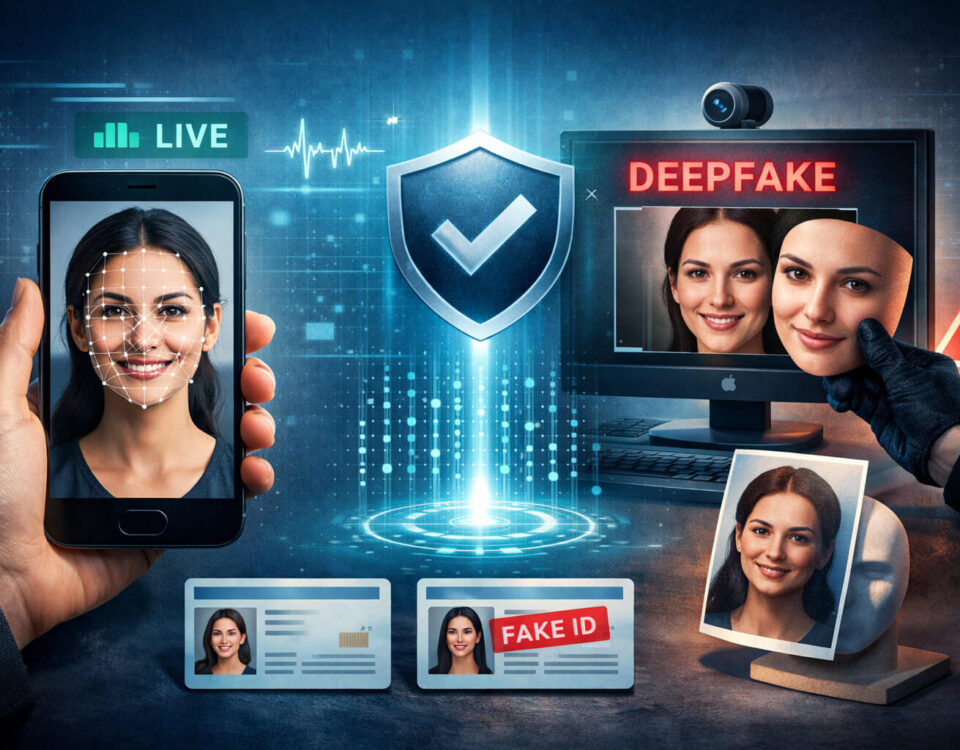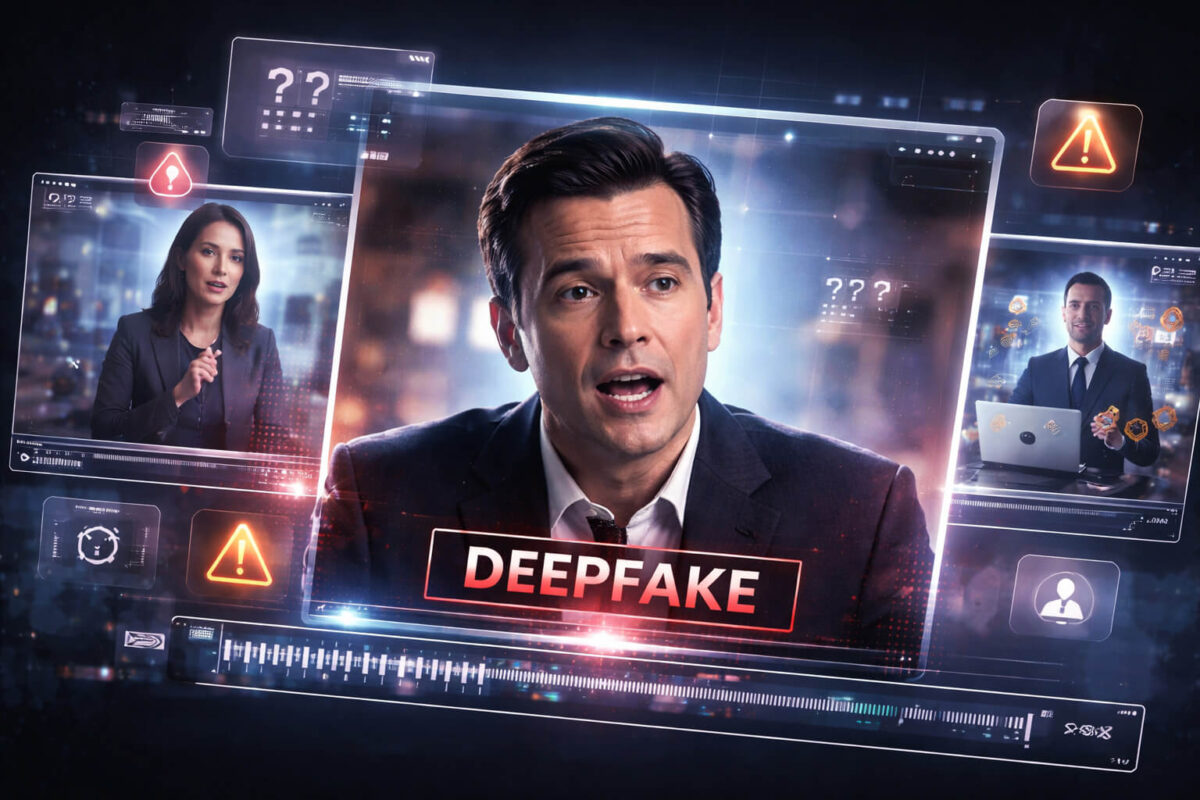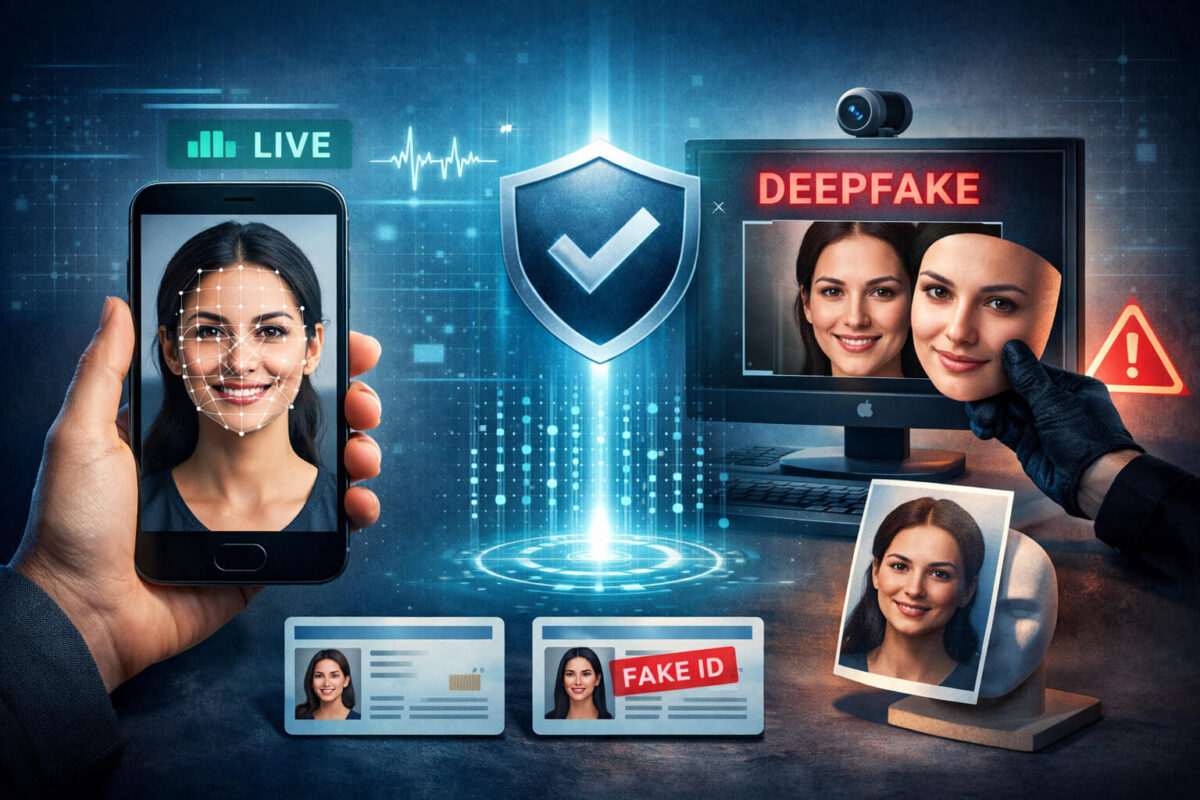
Celebrity videos carry instant credibility. When a familiar face “confirms” a breaking story, promotes a product, or makes an emotional statement, people tend to believe it before they verify it. That is exactly why AI impersonation has become one of the most effective tools for scammers and misinformation campaigns.
This guide gives you a practical way to detect fake celebrity video clips without needing forensic software or editing skills. You will learn what AI impersonation looks like today, which red flags still work, how to verify a suspicious clip properly, and where a tool like Detect Video AI can save time when you need an extra signal.
What AI Impersonation Means
AI impersonation is when someone uses artificial intelligence to make a person appear to say or do something they did not actually say or do. In celebrity content, it usually combines two or more of these techniques:
Face manipulation (visual):
A face swap or generated face is blended into real footage. Sometimes it is a full synthetic face, sometimes only parts like the mouth area are modified.
Voice cloning (audio):
An AI voice model imitates a celebrity’s tone, accent, and rhythm. This is often paired with a script designed to trigger urgency or trust.
Lip-sync and dubbing:
Even if the voice is real, the mouth movements may be changed to match different words.
Editing tricks that hide the seams:
Cropping, heavy compression, filters, fast cuts, reaction clips, and subtitles can reduce your ability to spot manipulation.
AI impersonation is not just “deepfake” in the old sense. Many viral fakes are mixed media: a real clip, a fake audio track, and a misleading caption. That combination is often more convincing than a fully synthetic video.
Why Fake Celebrity Clips Spread Faster Than Other Fakes
Celebrity fakes win for three reasons:
Trust shortcut: People recognize the face and assume authenticity.
Emotion leverage: Shock, outrage, urgency, or excitement pushes sharing.
Low friction: The clip is short, edited for mobile, and context is removed.
Scammers know that a 12-second clip with a famous face can outperform a long written scam page. That is why you see “celebrity endorsed” giveaways, crypto promotions, miracle products, political statements, and fabricated apologies.
The Most Common Types of Fake Celebrity Videos
Fake endorsements and paid promotions
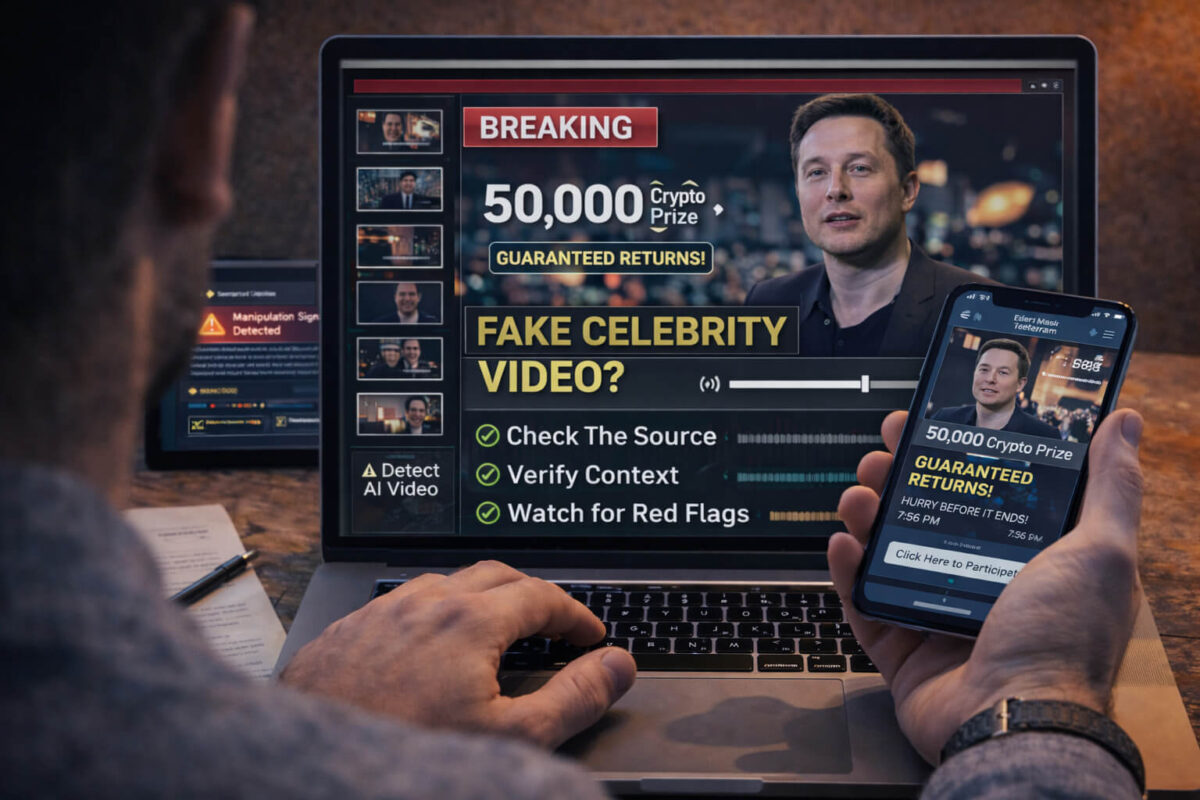
These clips claim a celebrity “recommends” a product, a trading platform, or a limited-time giveaway. Often there is a link in the bio, a WhatsApp number, or a fake brand account that looks similar to the official one.
Breaking news and “confessions”
This format uses a serious tone and a headline-like caption: “He finally admitted it” or “She reveals the truth.” It is built to bypass your skepticism by framing the clip as urgent.
Leaked footage and fabricated apologies
A celebrity “apologizes” for something they never did, or the clip is presented as leaked behind-the-scenes content. The goal is clicks, reputation damage, or engagement manipulation.
If your site content overlaps with general manipulation detection, you can also connect this topic naturally to deepfake detection and deepfake video learning resources, because celebrity impersonation is often the most visible form people encounter.
A Quick 60-Second Checklist Before You Share
When a clip feels urgent, do this quick loop first:
Check the source:
Who posted it? Is it from an official account? If it is “a fan page” or a brand-new profile, treat it as suspicious by default.
Check the claim in the caption:
What exactly is being claimed? Many fakes hide behind vague wording. If you cannot restate the claim clearly, you are being nudged to share emotionally rather than logically.
Check the context:
Does the setting match the claim? Does the clothing, event, or background make sense for the date being implied?
Check for duplicates:
Search the same quote or headline. If a clip is real and important, more than one credible outlet will likely reference it.
If the clip is high-impact or financially risky, move to a proper verification workflow below.
Visual Red Flags That Still Work
Even though AI tools improve fast, certain visual mistakes keep showing up, especially in short, heavily compressed social clips.
Skin texture and micro-detail mismatch
Real video has consistent fine texture across cheeks, forehead, and nose. Fakes often look slightly “smoothed” in one area, or the skin texture does not respond naturally to lighting.
Eyes and gaze behavior
Watch the eyes during quick head turns or emotional moments. Look for unnatural focus, odd reflections, or gaze that does not match the head angle. Some fakes have perfectly stable eyes while everything else moves, which looks subtle but wrong.
Teeth, tongue, and inner mouth artifacts
AI struggles when the mouth opens wide, the tongue appears, or teeth show clearly. You might see teeth that look too uniform, a tongue that flickers, or mouth shapes that do not match the syllables.
Lighting and shadow logic errors
Check whether shadows on the face match the scene lighting. Look at the nose shadow, jaw shadow, and reflections on glasses. If the face lighting does not “belong” to the environment, it is a strong clue.
Hairline, edges, and accessories
Hair strands, earrings, glasses frames, and hat edges are common failure points. Watch for blur, warping, or the face blending “over” an object that should be in front.
Tip: pause the clip and scrub frame-by-frame around fast movements. Many deepfakes look fine at normal speed but break when you slow down.
Audio Clues That Reveal Voice Deepfakes
Voice cloning is often the fastest way to fake a celebrity, and it can be done without perfect video manipulation. That means you must train your ear, not only your eyes.
Over-clean audio in a “real” environment
If a clip claims to be recorded in a noisy place but the voice is studio-clean, that mismatch matters. Scammers often paste a cloned voice over a real interview clip and let the background noise carry “authenticity.”
Emotion mismatch
A real human face and voice usually align emotionally. If the voice sounds angry but the face looks calm, or the face shows intensity while the voice is flat, that is a warning sign.
Unnatural pacing and breathing
Cloned voices sometimes miss natural breath timing, especially in long sentences. Listen for breaths that appear in odd places, or speech that flows too evenly with no human hesitations.
Pronunciation quirks that feel off-brand
Many celebrities have consistent rhythm, vowel shapes, and common phrases. A fake script may push them into wording they do not usually use, even if the voice sounds similar.
If you want to go deeper on audio manipulation, link this topic to voice deepfake content, because voice is often the easiest entry point for impersonation scams.
Caption Tricks That Make Fakes Look Real
A lot of viral “AI impersonation” content is not a perfect deepfake. It is a perfect deception.
Cropped context
A clip is trimmed so you never see the interviewer, the full stage, or the wider scene. That makes it harder to cross-check.
Stitched reactions
A real clip of a celebrity reacting is stitched to a separate clip of an event. People assume the reaction is to the event shown.
Misleading subtitles
Subtitles are powerful. A fake can keep the original audio but add subtitles that completely change the meaning.
The authority sandwich
This is a classic: platform logo + urgent caption + confident quote. It triggers trust even if the source is unreliable.
A Verification Workflow for Serious Cases
If a video could cause harm, financial loss, or reputation damage, use a more reliable process. This is also the workflow that helps your site meet higher-quality expectations, because it demonstrates expertise and real utility.
Start with the earliest source
Find the first upload you can locate. Many fake clips start in low-trust accounts, then get re-posted by bigger pages. If you can locate the earliest version, you can often find the original unedited clip.
Confirm the original context
Look for the full interview, speech, or stream. Compare the suspicious segment against a longer version. If the clip is real, there should be a longer context somewhere.
Use keyframe searching
Take a clear frame (a key moment where the face is visible) and search it. Sometimes the “celebrity clip” is actually an older interview reused with new audio.
Cross-check with credible sources
If the claim is major, credible outlets or official accounts usually address it. If the only evidence is one short clip and a dramatic caption, be cautious.
Treat metadata carefully
Metadata can be stripped or faked, and platforms often re-encode videos anyway. Use metadata only as a supporting clue, not proof.
Where Detect Video AI Helps
Human checks are essential, but time matters. When a clip is spreading fast, you need a quick tool-based signal before you invest time in deeper verification.
Use Detect AI Video as an additional layer in your workflow:
- Run suspicious clips when the face looks “almost” right but something feels off.
- Use it when captions make a strong claim and you need a manipulation signal quickly.
- Pair the result with source and context checks to avoid false confidence.
Think of Detect AI Video as a risk indicator. It can help you decide whether to dig deeper, not replace your judgment. If you also publish broader content for readers, video verification topics fit naturally next to this article because they teach repeatable habits.
How to Protect Yourself From Celebrity Impersonation Scams
AI impersonation is often used as a wrapper around a simple scam. Here is how to reduce risk immediately.
Never act based on one clip
If a celebrity “promises” returns, asks for help, or tells you to click a link, stop. Verify outside the platform.
Use a money rule
No payment, no crypto transfer, and no account login should ever happen because of a video. If the offer is real, there will be a safe, verifiable path through official channels.
Watch for off-platform pressure
Scammers push people into WhatsApp, Telegram, or private messages where reporting is harder. If the clip funnels you off-platform quickly, treat it as a scam pattern.
Report and document
If you see a dangerous impersonation, report it on the platform and capture the URL, account name, and screenshots. This helps with takedowns and protects others.
If your audience is frequently targeted, connecting this to scam videos content is useful, because the patterns repeat across niches.
Is AI Impersonation Legal
This is not legal advice, but here is the practical reality:
- Deceptive impersonation used for fraud is widely risky and often illegal.
- Parody and commentary can be allowed, but the line is context-dependent and can vary by country.
- Using someone’s likeness to sell something without consent is especially problematic.
- The safest approach is to treat viral celebrity “endorsement” clips as untrustworthy until verified.
If you are running a site in Europe, it is also smart to keep your transparency pages updated and make your verification guidance clear. That improves trust for users and can help with publisher network evaluations.
Real-World Patterns to Recognize
The “investment secret” pattern
A celebrity appears to reveal a trading trick or a private platform. The clip always includes urgency and a call to action.
The “giveaway” pattern
A celebrity appears to give away money, phones, or cars. The comments are filled with bots and fake testimonials.
The “shocking confession” pattern
A celebrity appears to admit wrongdoing. The clip is short, emotional, and designed to spread through outrage.
Once you learn these patterns, you will spot them quickly even before you analyze frames or audio.
Conclusion
AI impersonation is easiest to defeat when you slow down and verify the basics: confirm the source, check the claim, validate context, and search for the earliest upload before sharing. Most fake celebrity videos rely on emotional captions, cropped footage, and voice or lip-sync tricks that break under simple scrutiny, especially when you look for lighting inconsistencies, mouth artifacts, and audio that feels too clean or emotionally mismatched. When the stakes are high or the clip spreads fast, run it through Detect AI Video for an extra manipulation signal, then rely on cross-checks and credible sources to confirm what is real.
FAQ
What is AI impersonation in celebrity videos
AI impersonation is when AI tools are used to make a celebrity appear to speak or act in ways they never did, often using face manipulation, voice cloning, or lip-sync editing.
How can I tell if a celebrity video is fake quickly
Start with the source and context. If the clip is not from an official channel and the claim is dramatic, look for cropped footage, mismatched audio emotion, and mouth or lighting artifacts.
Are voice deepfakes more common than face deepfakes
In many scams, yes. Voice cloning is fast and can be placed over real footage, making the video look believable even when the audio is fabricated.
What should I do if I already shared a fake celebrity clip
Delete the post, add a correction if possible, and report the original source. If the clip involved a scam link, warn anyone who interacted and monitor your accounts.
Can tools detect AI impersonation with perfect accuracy
No tool is perfect. Use results as a signal, then confirm with source checks and cross-platform verification to avoid mistakes.
Why do celebrity impersonation scams push people to private messages
Because it reduces public scrutiny and makes it harder for platforms to detect and remove the scam. Off-platform conversations also increase pressure tactics.
Is a fake celebrity endorsement always illegal
Fraud and deceptive impersonation are high-risk and often illegal. Parody can be different, but if the content tries to trick people into paying, donating, or sharing misinformation, treat it as dangerous.