From input to interpretation
How AI video detection works in 3 simple steps.
Provide a video, let the hybrid engine apply multiple detection models with GPU-accelerated processing, then review the fused evidence and origin assessment in one report.
The images below show the input, analysis, and result journey. The live product supplies the current fields, limits, and report details.
-
Provide the video file or supported link
Choose the input that fits the evidence you have. Original files generally provide the strongest basis for file analysis; supported public links can begin source-oriented and other available workflows. The scanner shows current rules before submission.
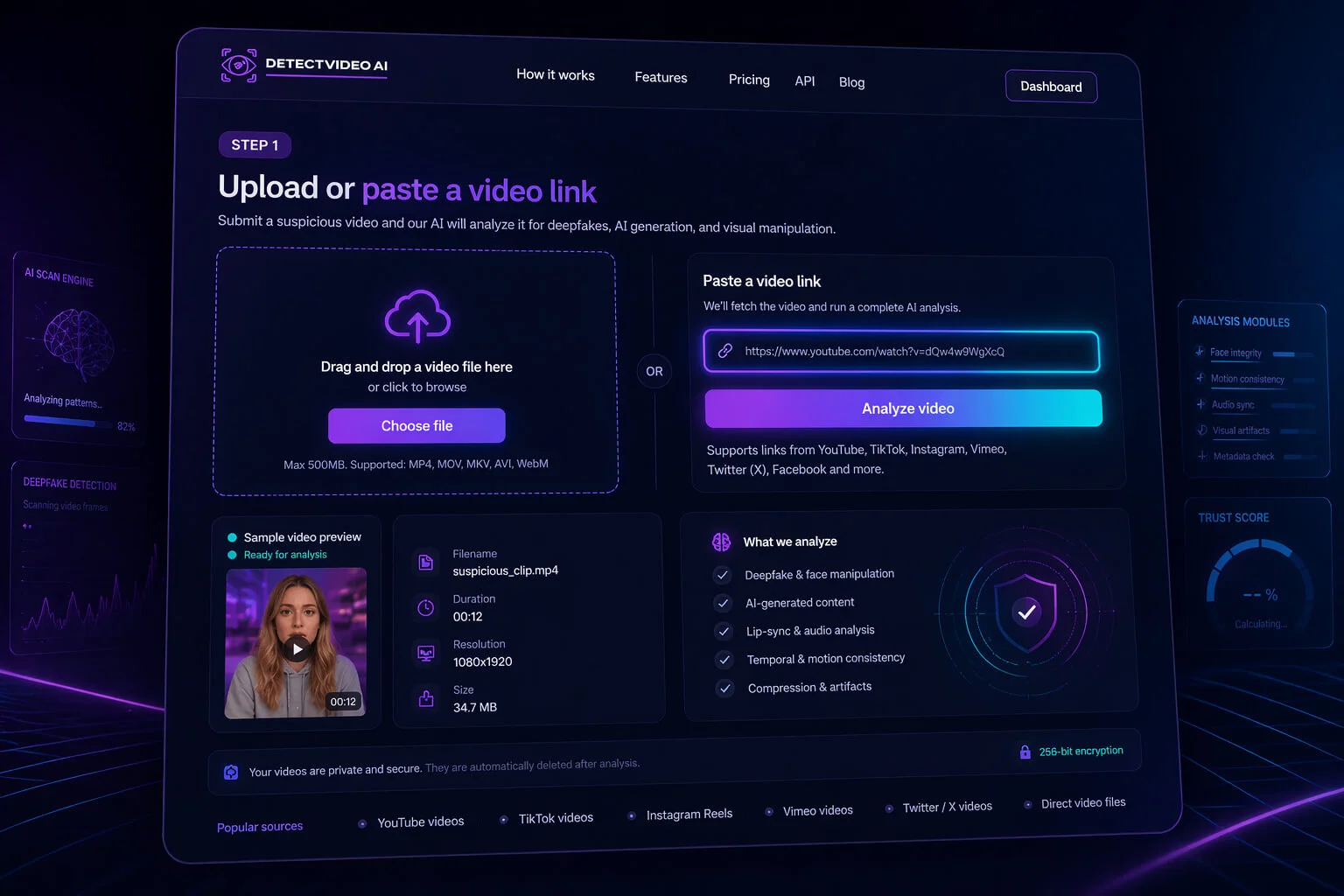
Illustrative input view. Use the live scanner for current sources, formats, and limits. -
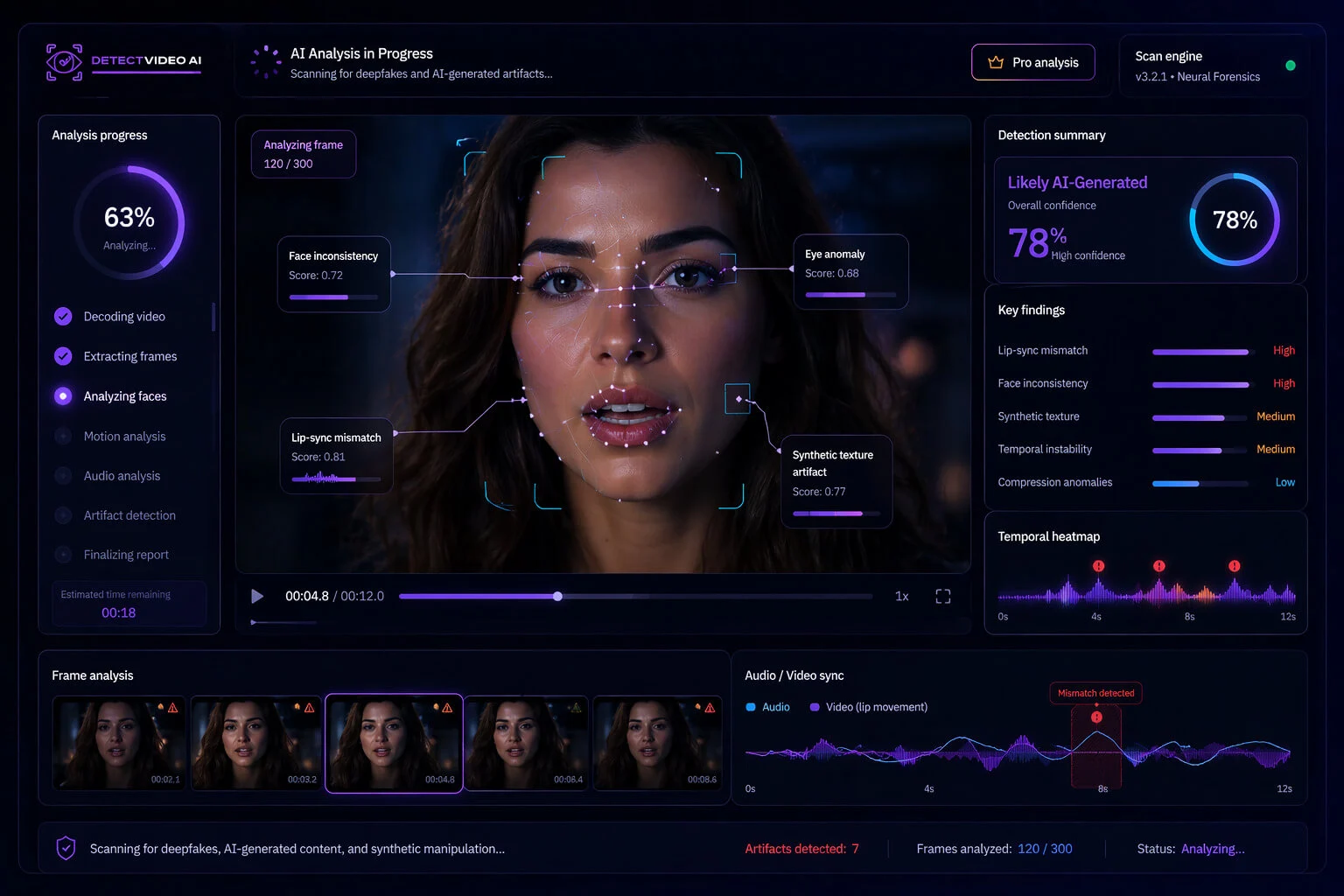
Inspect the available signal layers
Multiple detection engines review available visual, temporal, audio-video, manipulation, compression, metadata, and source signals. GPU-backed processing brings those complementary layers together efficiently.

Illustrative analysis view. Live progress, findings, and available signals vary by input and mode. -
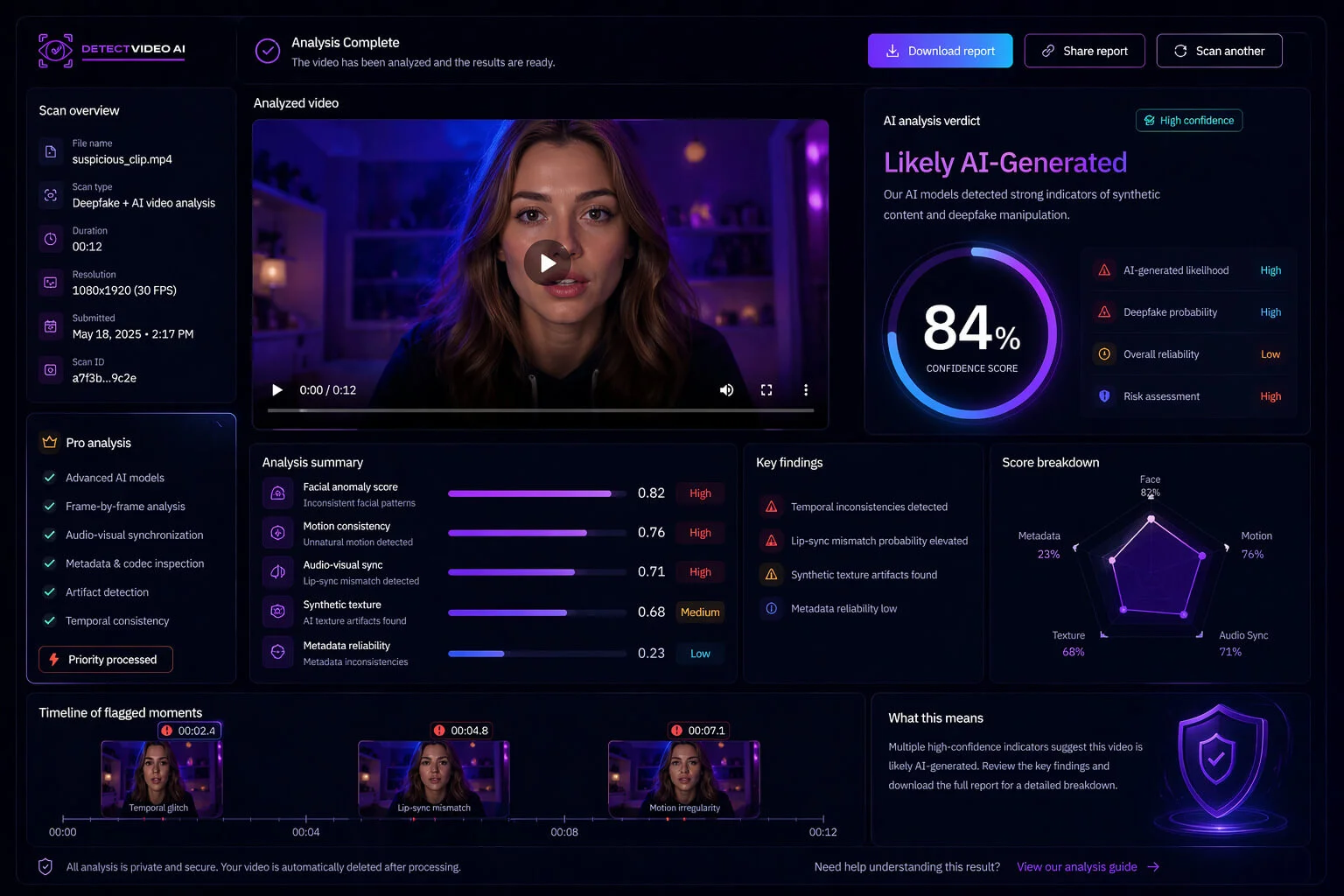
Interpret the result in context
Read the origin assessment, evidence coverage, detailed findings, and source conditions together. The report gives you a clear technical basis for the next verification decision.
Illustrative result view. The live report reflects the submitted video and available evidence.
Move from raw signals to a defensible review.
The hybrid report separates the origin assessment, evidence coverage, detailed findings, and source conditions so each part of the result is understandable.
For higher-impact decisions, preserve the original media, document the source, and compare corroborating material alongside the technical report.
Start with a file or supported public link.
The scanner will show the current input paths and rules before submission.